Fostering Success through Creative Engagement
Every learning context brings its own set of unique challenges. Excellent instructional design, however, means applying technology creatively to overcome those challenges to foster success for every learner.
Focus: Restoring the neurological benefits of active, hands-on learning in an online language course
Roles: Project Designer, Developer, and Producer
Tools: Microsoft Whiteboards, Zoom Whiteboards, Canvas Learning Management System (LMS)
Need: Enable students to engage in hands-on, active learning through digital media, despite the lack of software for composing in rare languages with non-Roman alphabets (LNRA). This project originated with a professor of biblical Hebrew, which uses an ancient, non-Roman alphabet that cannot be readily reproduced in most Learning Management Systems. While some pricey specialty software provides mechanisms for typing LNRA characters, these programs are cost-prohibitive for small clients.
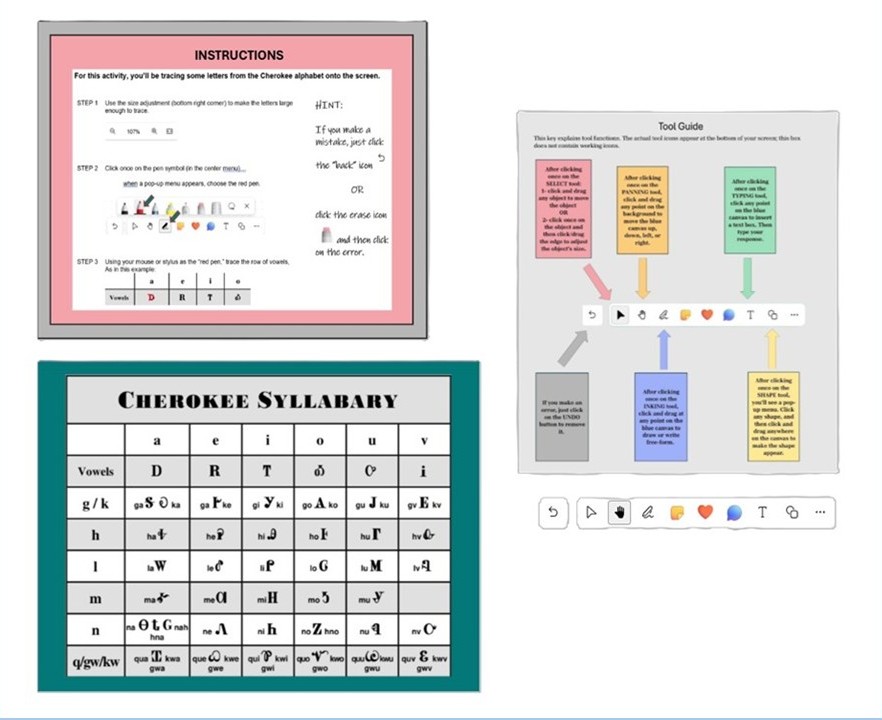
Solution: Incorporate purpose-built Zoom or Microsoft Whiteboards into Canvas pages to provide spaces for students to practice handwriting LNRA characters in real time, without uploading or downloading PDFs or paying for specialized software.
Research indicates that language learning, especially when it involves a new alphabet, is most effective when students engage in the kinesthetic activity of the characters- literal "hands-on" learning that stimulates neurons in multiple areas of the brain to encode the information.
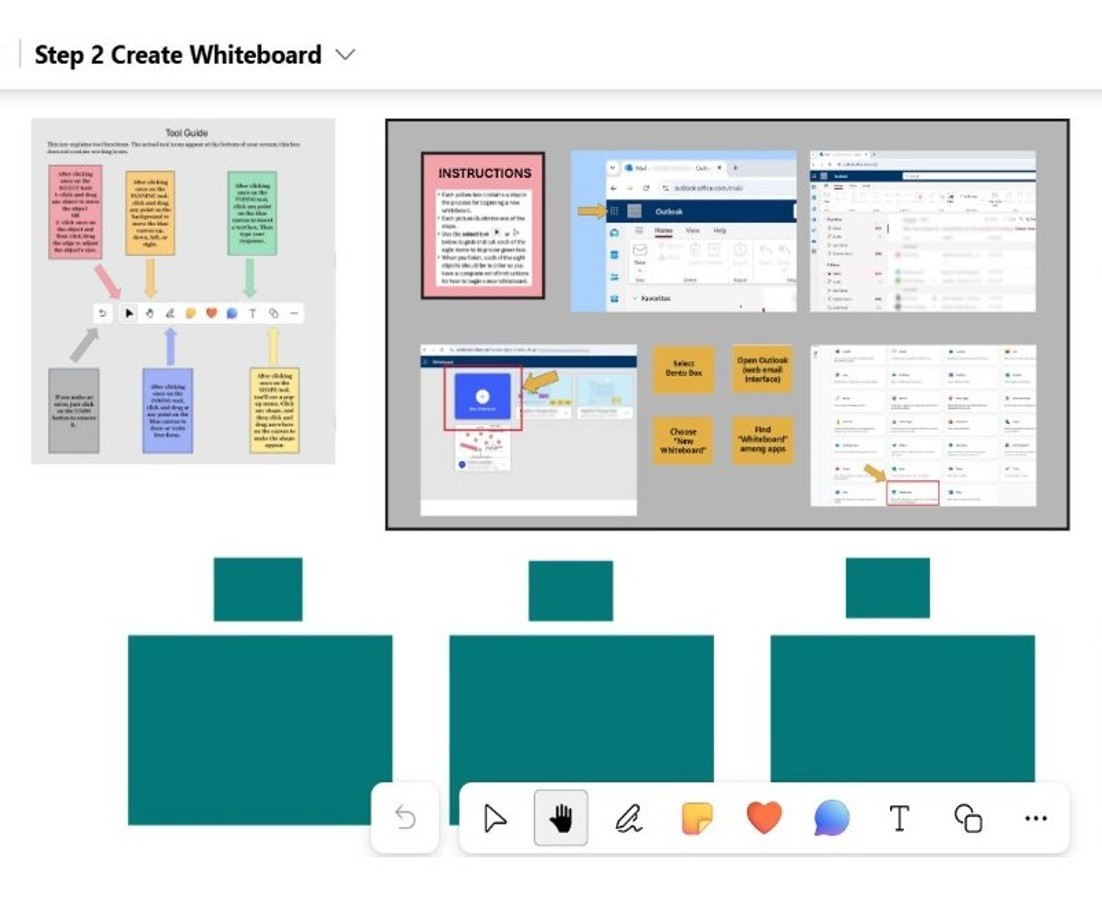
After researching, I created a prototype using software for Zoom Whiteboards. This program allowed students to produce Hebrew characters with an e-stylus, thus mimicking the kinesthetic exercise of handwriting. By reconfiguring the settings, I repurposed a tool already available at the institution to create and scale individualized learning interfaces for each student.
To reduce cognitive load, I also created a tutorial that gave students practice in the alphabet while also gaining confidence with the program. The results were strongly successful, with the vast majority of students scoring an A or B in this highly challenging subject.
Organizational Strategy: Material in this unit are designed to work in a variety of organizational contexts. The professor wanted her students to experience the advantages of interacting directly with the letters in real time for literal, hands-on learning. Her lessons were loosely organized around the principles of Gagne's Nine Events, with a special focus on formative assessment as a key in the iterative language learning process.
Delivery Strategy: One of the lynchpins of this project was Mayer's Multimedia Principles of Instruction, particulary the principle of contiguity. Graphics are carefully attuned with the aim of students seeing and reproducing characters in digital interfaces. To protect the integrity of the professor's assessment materials, screenshots have been reformatted with Cherokee syllabary. Using this alphabet also enabled me to develop training materials that could be used for professors in multiple contexts.