Leveraging Research-Based Strategies
Ensuring that new students can navigate the various tech platforms in an educational environment is fundamental to retention and growth for any institution, particularly those with nontraditional adult learners. Aiming to meet this need, I used research-proven tactics including pedagogical agents and scenario-based learning to design a short course with Articulate's Storyline 360.
Focus: Fostering student retention by facilitating new students' use of institutional tech platforms.
Roles: Project Designer, Developer, and Producer
Tools: Articulate Storyline360, Canvas Learning Management System (LMS), SONIS Student Information System (SIS)
Need: Empower entering graduate students to access the institution's major technology systems for learning interaction, administrative communication, and wrap-around services
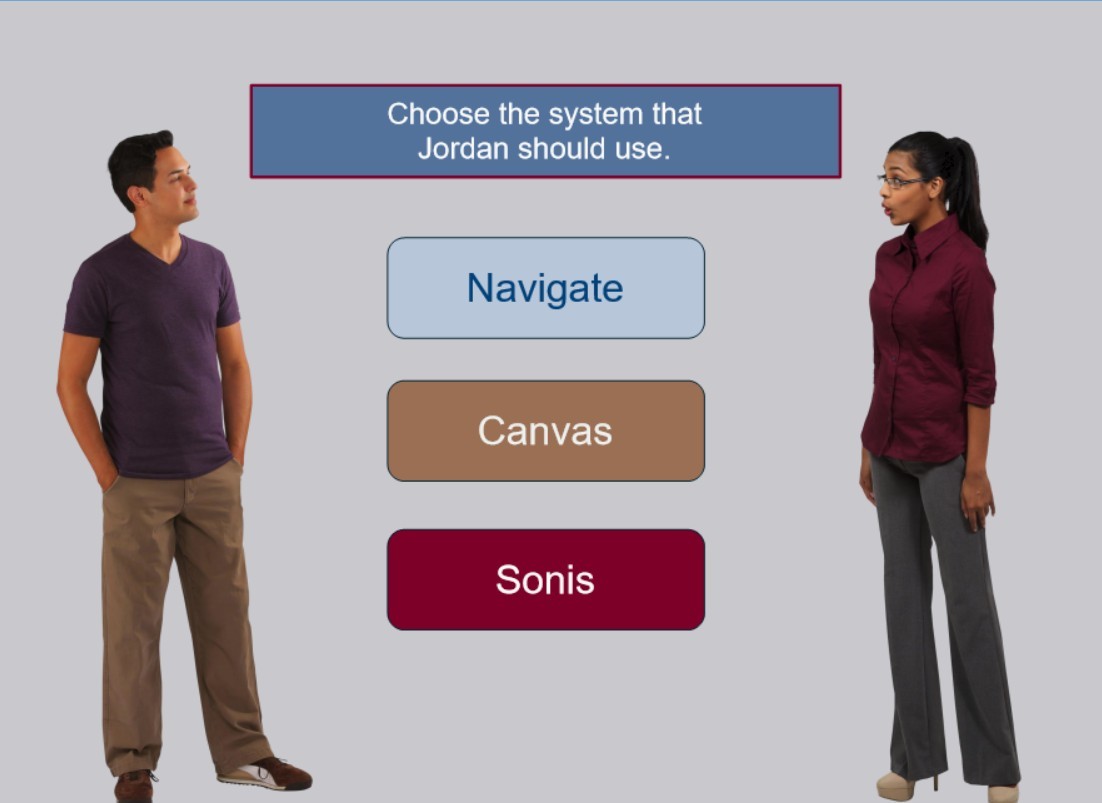
Solution: This self-paced, scenario-based module, created with Adobe Storyline360 software, features two tools that research suggests are powerful catalysts of student engagement: pedagogical agents and learner-centered interactivity (Clark & Mayer, 2016).
Designed to help new students confidently manage the LMS, SIS, and wraparound services app independently, this learner-centered interactive course features branching to follow a user’s needs and interests. Personalities and narratives are included to engage learners while also reinforcing the learning targets.
Organizational Strategy: Reflecting an abbreviated ADDIE process, the Rapid Instructional Design method used for this project facilitated a brief timeline from analytical research to refined prototype. Built for deployment in a Canvas LMS orientation course, this module was designed to feed into a comprehenisve assessment housed in the LMS.
Delivery Strategy: To facilitate optimal learning, this short course reflected Mayer's Multimedia Principles of Instruction, particulary interactive graphics organized through signaling and segmenting. Irony and humor are used subtly, in keeping with Mayer's Coherence Principle, to support learner motivation through pedagogical agents. Graphics blend classic color theory with the institution's official colors in a product designed to present a solid and welcoming learning experience for new students.
This project initiated several possibilities for the institution's Ed Tech team. While the department for whom this project was initially developed had to pivot due to budget constraints, the completed project brought both teams new awareness of the benefits of interactive modules and pedagogical agents. Additionally, it opened conversations for how to gather and use interactive data to inform instruction.